
Samsung Electronics is facing growing attention from investors as its labor union prepares for a possible full-scale strike.
For many retail investors, the key question is simple.
Could this become a serious risk for Samsung Electronics stock?
The issue is not only about labor relations. It could also affect investor sentiment around Samsung’s semiconductor business, HBM production, and future AI chip competitiveness.
1. Why Is the Strike Being Discussed?
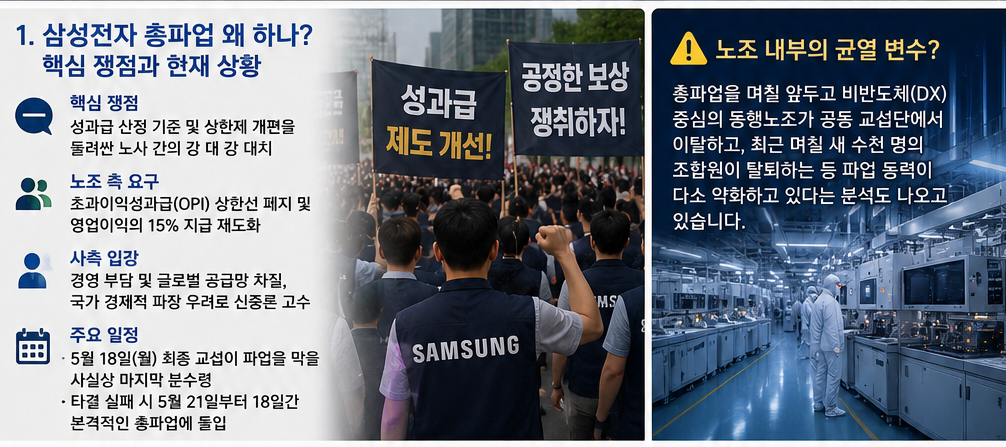
The main conflict is related to Samsung Electronics’ performance bonus system.
The union is demanding changes to how bonuses are calculated, including stronger links between company profit and employee compensation.
On the other hand, the company appears to be taking a cautious position, considering business costs, global competition, and possible supply chain risks.
This is why the issue is attracting market attention.
It is not just a labor issue.
It is connected to:
- semiconductor production
- HBM supply expectations
- investor sentiment
- Samsung’s global competitiveness
2. Could a Strike Hurt the Stock Price?
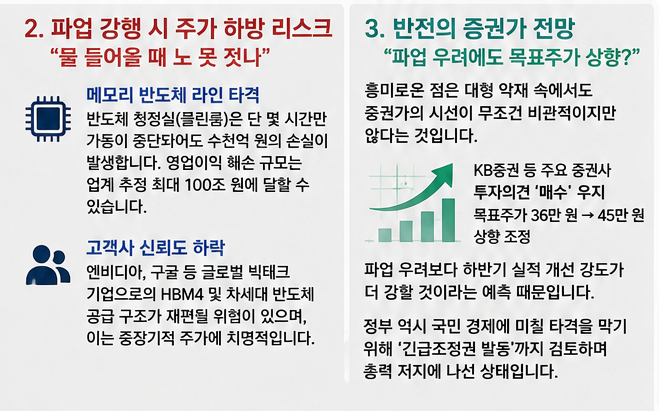
If the strike actually happens, the stock price could face short-term pressure.
Investors usually dislike uncertainty.
Even if the company’s long-term fundamentals remain strong, a strike can create concerns about:
- production delays
- weaker market confidence
- possible impact on semiconductor output
- delays in key AI-related business plans
This is especially important because Samsung Electronics is trying to regain strength in the semiconductor market.
3. The Biggest Question: Will Production Be Affected?
The most important point is not simply whether workers go on strike.
The real question is:
Will Samsung’s semiconductor production lines actually be disrupted?
If the impact is limited, the stock may only show short-term volatility.
But if production delays become visible, the market could react more strongly.
For a company like Samsung Electronics, even a small disruption in semiconductor production can create major concerns among investors.
4. Why Some Analysts Are Still Positive
Interestingly, some market views remain positive despite the strike risk.
The reason is that investors are still focused on Samsung’s long-term recovery story.
Key positive factors include:
- recovery in the memory semiconductor market
- growing demand for AI chips
- HBM-related expectations
- stronger earnings outlook in the second half
- Samsung’s global position in semiconductors
In other words, the strike issue may create short-term noise, but the bigger trend still depends on semiconductor performance.
5. Possible Stock Price Scenarios
| Scenario | Situation | Possible Stock Reaction |
|---|---|---|
| Agreement before strike | Labor and management reach a deal | Uncertainty decreases, stock may rebound |
| Short strike | Strike begins but ends quickly | Short-term volatility, then recovery |
| Long strike | Conflict continues and production concerns grow | Stock may face downward pressure |
| Limited production impact | Strike continues but production remains stable | Stock may refocus on earnings and AI momentum |
6. What Investors Should Watch
Investors should not simply react emotionally to the word “strike.”
Instead, they should watch three things carefully.
First, whether negotiations improve before the strike begins.
Second, how many workers actually participate.
Third, whether there is any real impact on semiconductor production.
The stock price will likely react more strongly to production impact than to the strike announcement itself.
7. Is This a Fundamental Problem?
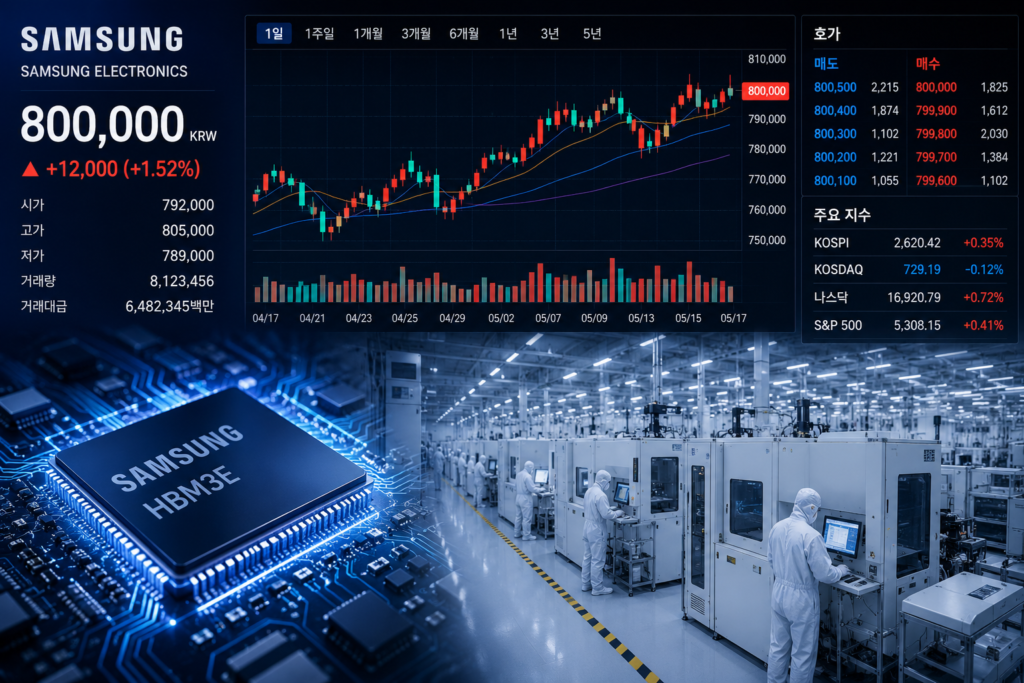
At this stage, the strike risk looks more like a sentiment issue than a fundamental collapse.
Samsung Electronics still has strong core businesses.
Its long-term direction depends more on:
- semiconductor recovery
- HBM competitiveness
- AI demand
- global chip cycle
However, if the strike becomes prolonged and production disruptions become real, the risk could become more serious.

Final Conclusion
Samsung Electronics’ strike risk could create short-term volatility in the stock price.
However, the real issue is not the strike itself.
The key question is whether the strike causes actual production disruption.
If negotiations improve or production impact remains limited, the stock could quickly return to focusing on semiconductor recovery and AI-related growth.
But if the strike becomes prolonged and affects production lines, investor sentiment could weaken in the short term.
One-Line Summary
Samsung Electronics’ strike issue is a short-term risk, but the stock’s real direction will depend on semiconductor production, HBM progress, and earnings recovery.
※ This article is for informational purposes only and does not constitute investment advice. All investment decisions are the responsibility of the investor.